A mechanical watch has no battery and no circuit. It is a chain of five systems that store, transmit, divide and regulate energy. This is how ours is built.
Calibre OB-01 · 4 Hz · 72 h
02 · Signature · Interactive
The art of mechanical precision.
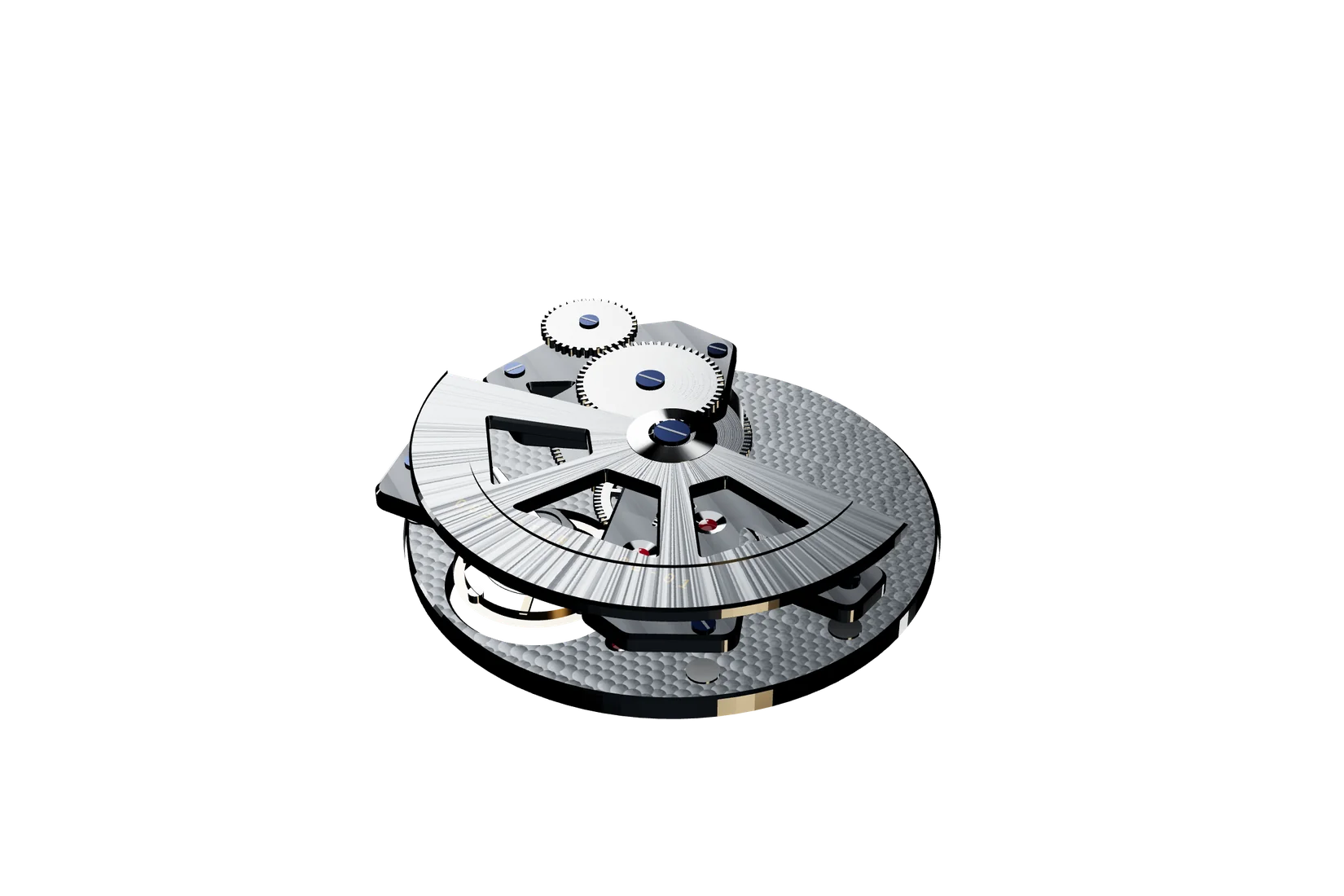
A conceptual calibre, built in real time. Turn it, take it apart along its axis and isolate each organ of the movement to see what it does.
Calibre
OB-01 · Ø 29.6 mm
Beat
4 Hz · 28,800 vph
View
Assembled
Overview · Assembled
Calibre OB-01
Select a component below, or click it in the movement.
Overview · Assembled
Calibre OB-01
Around two hundred components, assembled into a disc 29.6 mm across. Drag the movement to turn it. Select any component to isolate it.
Overview · Exploded
Seven layers
Separated along its axis, the calibre reads like a building: foundation, structure, mechanism and the regulating organ on top.
Component 01 / 07
Oscillating rotor
A skeletonised half-disc on a ceramic bearing. Every movement of the wrist winds the mainspring in both directions.
Component 02 / 07
Bridges
Five faceted bridges machined from titanium plate. Each angle is hand-polished, each flat is straight-grained.
Component 03 / 07
Balance wheel
The regulating organ. A variable-inertia balance beating at 4 Hz, 28,800 vibrations per hour, held by a single cock.
Component 04 / 07
Escapement
The escape wheel and pallet fork release the train one tooth at a time. This is where the tick is made.
Component 05 / 07
Gear train
Centre, third and fourth wheels reduce the barrel's slow force into seconds, minutes and hours.
Component 06 / 07
Mainspring barrel
Stores the energy. A single long barrel gives a 72-hour power reserve in this concept calibre.
Component 07 / 07
Main plate
The foundation every component is positioned on, finished with circular graining that catches the light.
Illustrative calibre. Proportions and component counts are conceptual, not an engineering drawing.
03How it keeps timeFive systems
01
Energy
Mainspring barrel
A coiled spring stores the force of winding, by hand or by rotor.
02
Transmission
Gear train
Four wheels reduce that force into steady, slow rotation.
03
Distribution
Escapement
The escape wheel and pallet fork release it one tooth at a time.
04
Regulation
Balance wheel
An oscillator at 4 Hz decides how long each release lasts.
05
Display
Hands
The motion works turn released energy into hours and minutes.
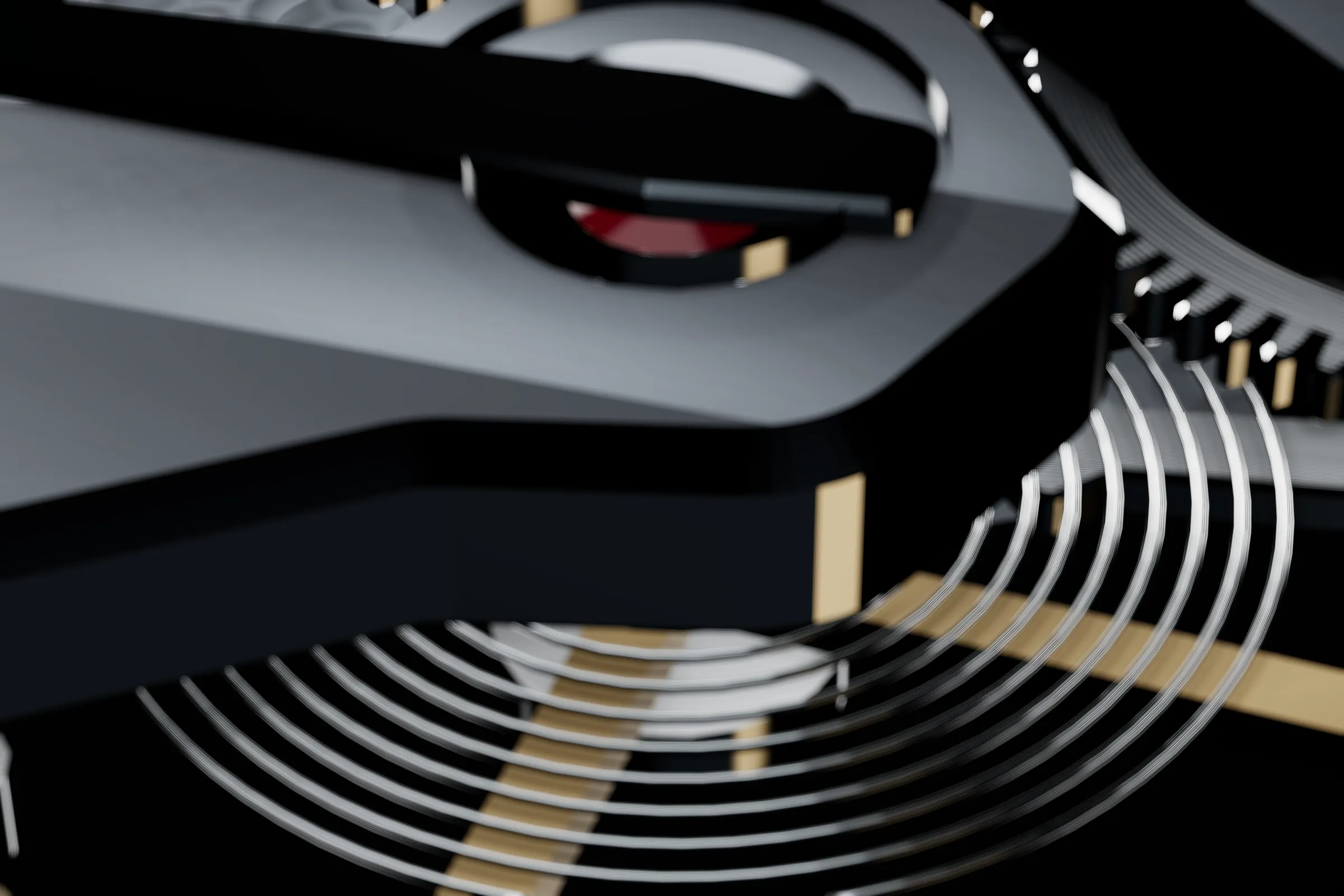
Fig. 3 The balance under its cock, a ruby jewel in a polished countersink. Calibre OB-01, render.
04CalibresConcept data
OB-01
Calibre OB-01, automatic
A single-barrel automatic calibre with a skeletonised rotor visible through the sapphire caseback. The balance oscillates at 4 Hz and is held by a single faceted cock.
A hand-wound, inverted layout: the gear train and escapement work on the dial side, under the crystal. Without a rotor, the movement stays thin and the view through the caseback stays open.
An automatic column-wheel chronograph with vertical clutch, so the seconds hand starts without a jump. The rotor and the chronograph works are visible through the sapphire caseback.